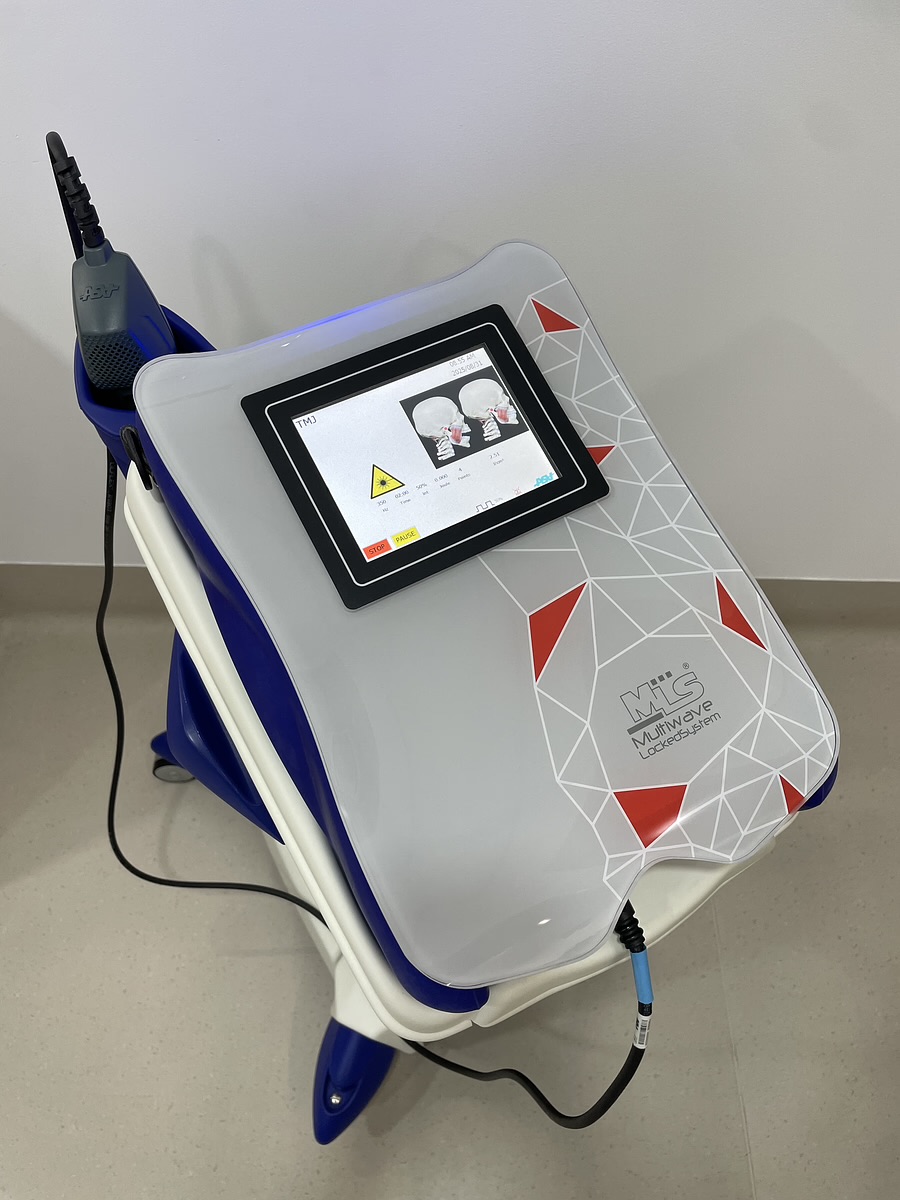
To support healing, reduce inflammation, and relieve pain, we may incorporate MLS (Multiwave Locked System) Laser Therapy as part of your care plan.
This advanced, non-invasive laser system delivers synchronized wavelengths of light energy—one continuous and one pulsed—that work together at the cellular level to:
Stimulate circulation
Accelerate tissue repair
Modulate inflammation
Provide lasting pain relief
Unlike older laser modalities, MLS therapy is uniquely calibrated to target both pain and inflammation simultaneously, making it especially effective for complex or chronic conditions like TMJ dysfunction. Patients often report reduced muscle tension and improved range of motion after treatment.
MLS Laser is completely painless, drug-free, and safe for use alongside oral appliance therapy, nutritional support, and other integrative treatments.
It’s highly recommended. You’re not merely missing a tooth, but the quality of your life, including your appearance, how you speak and eat, as well as your self-esteem and confidence. With Admire Dentistry, we will offer you a tailored teeth replacement based on your needs.
A bridge and a crown are different dental treatments. A crown covers and restores a damaged or root canal-treated tooth, and it is placed over a single tooth. A bridge is similar to a crown in that it requires the crowning of a tooth on either side of a space, and then an interconnected artificial tooth replaces the missing tooth in between. While bridges incorporate crowns, they serve distinct purposes.
Traditional Bridges: The most common type, consisting of one or more pontics (artificial teeth) held in place by dental crowns cemented onto adjacent natural teeth. The most common bridge replaces a single missing tooth by crowning one tooth on either side and supporting a pontic in the middle that replaces that missing tooth.
Cantilever Bridges: Similar to traditional bridges but supported by a single crown on one side only, then a pontic (artificial tooth) hangs off the side. Usually only in the anterior of the mouth and reproduces a natural smile that is easy to clean around.
Maryland Bridges: Use a framework of either metal or porcelain that is bonded onto the backs of the adjacent teeth. No removal of tooth structure or crowning of the adjacent teeth is required. A pontic (artificial tooth) hangs off the bonded framework.
Implant-Supported Bridges: Supported by dental implants rather than crowns on natural teeth. Typically, instead of crowned teeth supporting the bridge, like a traditional bridge, you’ll have implants supporting the bridge. This works well when you have multiple missing teeth but good bone thickness to support multiple implants.
Each type has its advantages, and the best choice depends on the location and number of missing teeth, as well as individual factors. Contact Admire Dentistry for a consult to discover what treatment is best suited to you.
The dental implant-supported bridge procedure replaces missing teeth using implants in the jaw bone and a bridge that looks like teeth to restore aesthetics and function. After assessment and implant placement, a healing period allows implants to integrate with the jawbone. Abutments are then attached, followed by digital impressions for a custom bridge. The bridge that matches natural teeth is then secured onto the implant using specific abutments, restoring function and appearance. The procedure offers lasting benefits like improved chewing and aesthetics. Variations may occur based on individual needs and techniques. Please consult with Dr Mick at Admire Dentistry to determine the best treatment plan for you.
After a dental implant-supported bridge, expect initial discomfort, swelling, and minor bleeding. The healing phase involves osseointegration, which usually takes up to several months. During this process, follow a soft diet, avoid certain foods, and attend regular check-ups. Good oral hygiene is vital for long-term maintenance, and our hygiene team at Admire Dentistry is committed to facilitating this for you.
Attending your routine dental exam and clean appointments is vital for the longevity of your implant-supported bridge. With time, you’ll gradually regain full chewing function and comfort.
Tooth-supported fixed bridges (using your natural teeth to support a dental bridge, not an implant) can last for a significant duration, often ranging from 5 to 15 years or even longer, with proper care. The lifespan depends on factors such as oral hygiene practices, diet, habits, and the quality of the bridge itself. Regular dental check-ups and maintenance play a crucial role in ensuring the longevity of the bridge. Over time, wear and tear might cause required adjustments or replacements, but with diligent care, a tooth-supported fixed bridge can provide functional and aesthetic benefits for many years.
Bridges are quicker, less invasive, and often cheaper if adjacent teeth are not affected. Implants requiring surgery offer a long-lasting solution that preserves the jawbone and feels natural but might cost more upfront and need sufficient bone density. Personal needs and oral health determine the best choice. Consult with our dentist, Dr Mick Curtis, for all your implant and bridge questions. He will educate you to make the best-informed decision.