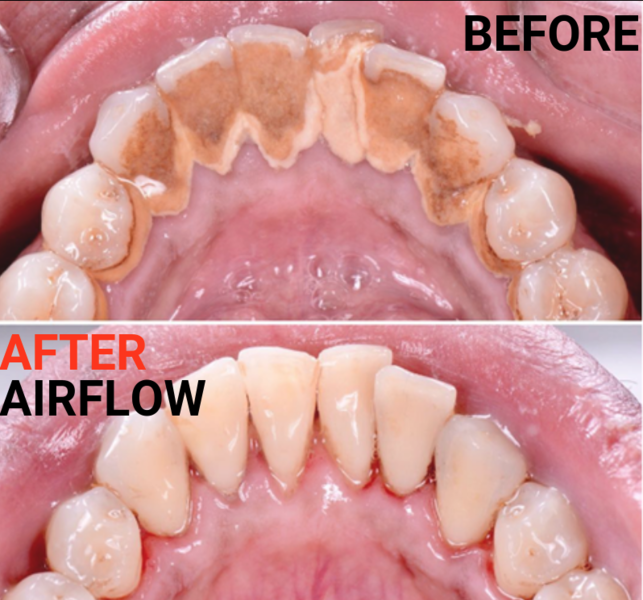
The main cause of gum disease is caused by an excessive accumulation of plaque on the tooth surface. Plaque that is not cleaned off regularly via tooth brushing and flossing hardens to form calculus (tartar). Once calculus is formed this cannot be removed with your toothbrush and has to be professionally cleaned off.
Medical conditions- diabetes, cardiovascular disease, immune disorder
Bleeding gums and bad breath are both signs that your gums are unhealthy and need attention.
The two most common forms of gum disease are gingivitis and periodontitis.
Gingivitis
Gingivitis is caused by the accumulation of dental plaque on teeth. In the absence of cleaning, this plaque causes inflammation of the gums. This inflammation can cause the gums to be red and swollen and subsequently bleed.
Gingivitis is reversible, provided thatthe plaque is removed and subsequently kept clean.
Whilst gingivitis can be reversible, if left untreated, it can progress to a more severe form of gum disease known as periodontitis.
Periodontitis
Periodontitis is a more severe form of gum disease and is an irreversible form of gum disease which affects the tooth’s supporting structures. Periodontitis can initially be painless however, eventually leads to inflammation in the bone structure supporting the teeth in place. When left untreated, periodontitis can lead to significant attachment loss between teeth and the supporting bone structure, which unfortunately can lead to tooth loss.
Treatment of periodontitis/ Periodontal Therapy
We offer periodontal (gum disease) treatments at Admire Dentistry tailored by our OHT to suit you based on their initial gum health assessment of your teeth.
Periodontal Therapy involves removing plaque and calculus from around the tooth and root surface (scaling) to help reduce inflammation and aid in healing. The severity of the gum disease will determine the amount of appointments needed. Scaling may have to be performed in multiple visits to ensure the best outcome for your dental health. While a professional clean is paramount in treating gum disease, tailoring an at-home oral health routine is just as important. Your OHT will be able to make recommendations to help ensure that your oral hygiene routine supports your overall oral health.
While all efforts will be made to help stabilise periodontitis and manage it, we also work closely with specialists to ensure you’re being offered the best comprehensive treatment.
Brushing your teeth twice a day will help minimise the risk of getting gum diseases. It is also important to clean between your teeth to gently clean under your gums at least once a day. But that’s not everything – diet and gut health are extremely important to maintaining healthy gums. Digestive upsets, mouth breathing, unbalanced hormones and malnourishment can all affect your gums. It is important to understand that the whole body is connected. A healthy gut ensures a healthy body system, a healthy brain, and a healthy mouth. In addition to this, other health factors can have a negative effect on your gum health, such as diabetes, xerostomia, and other autoimmune conditions.
The underlying cause of bad breath might be mouth infection, cavities, gum disease or dry mouth. Dry mouth is a common cause of bad breath and can be caused by mouth breathing, medications causing a dry mouth, and/or dehydration. Consult your dentist immediately to find the cause.
It depends. Periodontal therapy can involve both non-surgical and surgical procedures. While non-surgical methods like scaling and root planing are common first-line treatments, advanced periodontal disease may necessitate surgical interventions. These can include procedures like gingival flap surgery, gingivectomy, bone grafts, and guided tissue regeneration. The choice of treatment depends on the severity and is unique to every patient’s needs.
No, the procedure is not painful. However, a small number of people may experience discomfort if the scaling goes around the gum lines. Since introducing the EMS AirFlow, our patient reports of sensitivity have dropped significantly. For the handful of patients who still experience sensitivity, Admire Dentistry offers a strong topical numbing gel that can be placed on your teeth & gums. On the odd occasion that this is not enough, we can give local anaesthetic using The Wand. A painless injection device that has been providing relief to patients with needle phobias since Admire Dentistry opened its doors.
A computer-controlled local anaesthetic device. It is unassuming and does not look like a conventional needle. The Wand controls the speed and amount of anaesthetic that is delivered to each patient to reduce pain and ensure optimal numbing of the area.
No. Although you might think you are cleaning your teeth well and avoiding the cost of the dentist, it can actually cause more problems. Not only would you risk damaging your teeth and gums, but you could also burnish the calculus. The instruments used to clean calculus must be sharpened at the perfect angle and then applied to the tooth surface with the correct movement. If this is not performed correctly, the calculus is not completely removed and instead burnished (or polished) onto the tooth surface. This will not present a problem immediately, but over time it will cause a hidden obstruction for bacteria to get caught on, which will lead to an acute gum infection. Do yourself a favour, brush twice a day and clean between your teeth once a day, eat a balanced diet, check your hormones and vitamin levels are correct, and see Admire Dentistry every 6 months for your routine dental hygiene appointment.
If your gums bleed, this means they need more attention. This does not mean brushing harder and faster; instead, brush your teeth and GUMS softly but effectively for the full 2 minutes, and clean between your teeth. If the bleeding continues after 3-4 days of this, then consult your dental practitioner immediately.
Yes and No. If it is an acute flare-up from not brushing and flossing as well as you normally do and you are not due for your 6-month routine hygiene appointment, then getting back into your normally effective oral health routine should clear things up. However, if bleeding persists for more than 4 days, see your dental practitioner immediately.
If it is an acute flare-up from not brushing and flossing as well as you normally do and you are not due for your 6-month routine hygiene appointment, then getting back into your normally effective oral health routine should clear things up. However, if bleeding persists for more than 4 days, see your dental practitioner immediately. Vitamin deficiencies and hormone imbalances may cause bleeding gums. In most cases, gingivitis and periodontitis are the main reasons for bleeding gums.